

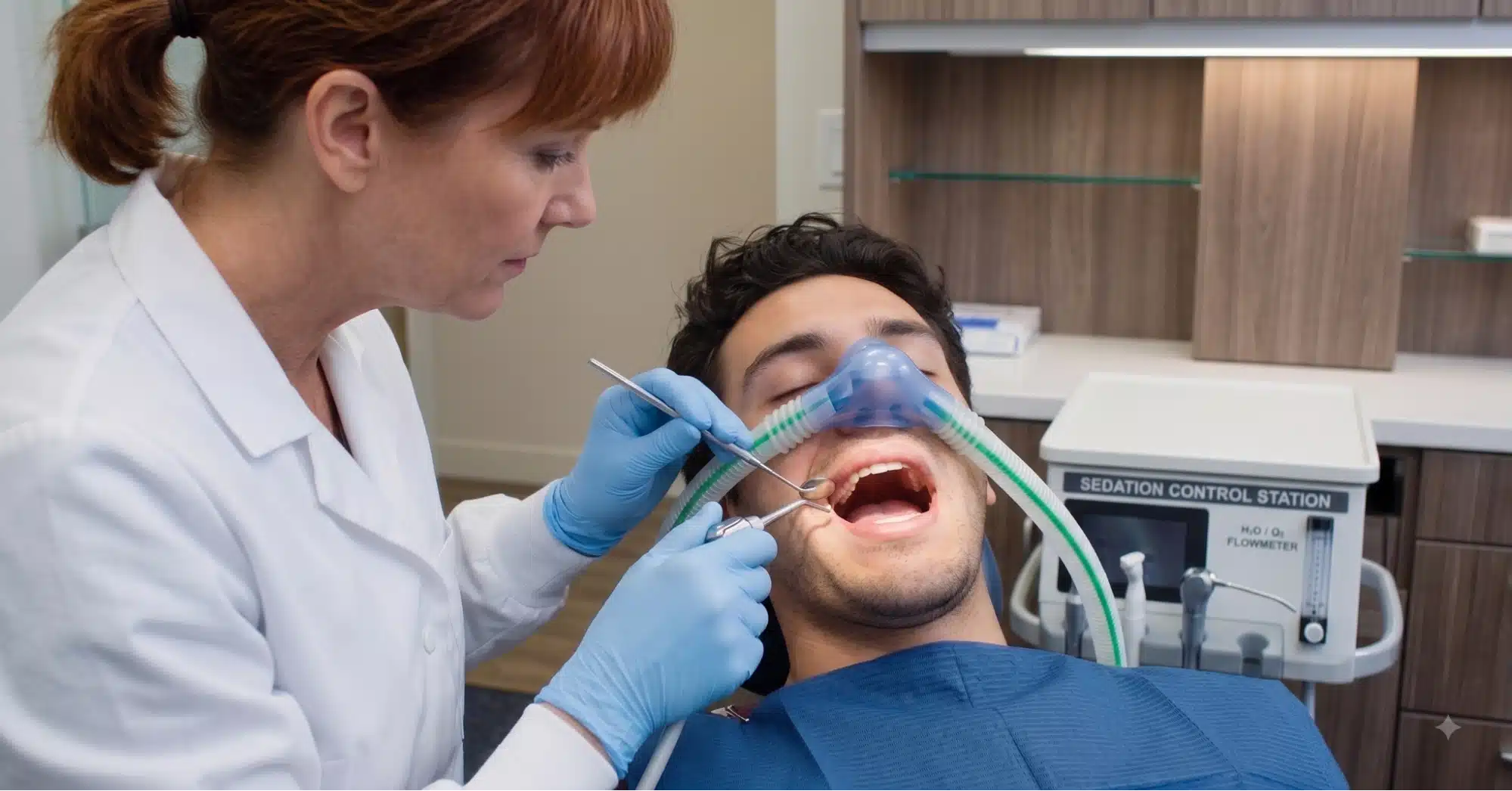
Quick answer: Yes, sedation dentistry is safe for most patients when performed by a trained dental professional who reviews your medical history first. Patients are continuously monitored throughout treatment, and recovery time depends on the type used, from a few minutes for nitrous oxide to several hours for oral or IV sedation. It is generally not recommended for people with certain respiratory or heart conditions, or for pregnant women, without prior medical evaluation.
Summary
Many people fear dental chairs and dentists, and thus they procrastinate going to the dentist as long as possible. For these people, sedation dentistry works like magic. It helps patients with gag reflexes, anxiety, and those undergoing lengthy procedures. While it seems like a great option, the question that often arises is: “Is sedation dentistry safe?”
The answer is yes. However, you should know how sedation works, who benefits from it, and what happens before, during, and after sedation.
This blog has covered it all.
The key highlights of the blog are:
- Sedation dentistry helps anxious patients feel calm and comfortable during dental treatment.
- The answer to “Is sedation dentistry safe?” is generally yes when performed by trained dental professionals.
- Dentists review your medical history before recommending any sedation method.
- Patients are continuously monitored during moderate or deeper sedation.
- Different sedation options are available depending on the procedure and patient needs.
- Following pre- and post-treatment instructions helps ensure a smooth recovery.
The mere thought of sitting in a dental chair can be daunting to many people. Unpleasant experiences in the past, sensitive teeth, or fear of pain can hold them back from getting the treatment they need.
Modern dentistry has evolved, and today, sedation dentistry is making treatment possible for those who want to feel calm and relaxed during the procedure.
The question, though, is: “How safe is sedation dentistry?”
You will find the answer in this blog. Read on!
What Is Sedation Dentistry?
It involves using medication to help patients relax during dental procedures. It allows patients to either remain fully awake, deeply relaxed, or in a sleep-like state while still being able to respond to instructions.
Sedation is recommended for patients who:
- Experience moderate to severe dental anxiety
- Have a strong gag reflex
- Need multiple procedures in one visit
- Have difficulty sitting still for extended periods
- Require complex oral surgery
- Have special healthcare needs
The goal is to reduce their anxiety and provide them with a more positive dental experience.
Is Sedation Dentistry Safe?
Yes.
For most patients, sedation dentistry is very safe when administered by a qualified dental professional with appropriate training.
Before recommending sedation, your dentist carefully reviews:
- Your medical history
- Current medications
- Allergies
- Previous experiences with anesthesia or sedation
- Existing medical conditions
This evaluation helps determine the safest sedation method for your individual needs.
So, when patients wonder, “Is sedation dentistry safe?”, the answer depends on their medical history, careful planning, and continuous monitoring throughout treatment.
Expert insight from Dr. Jeremy Silverman, DMD: “The safety of sedation comes down to preparation. We are not just picking a sedation type off a menu; we are matching it to a patient’s health history, anxiety level, and the procedure itself, and then monitoring them closely the entire time.”
What to Expect Before Your Appointment?
Before the sedation, there are specific dos and don’ts that you should follow:
The dentist might recommend:
- Avoiding food or drinks for a certain period before the appointment
- Wearing comfortable clothing
- Arranging for someone to drive you home if needed
- Discussing all medications and supplements you currently take
- Following any specific instructions provided by the dental team
These steps help minimize risks and ensure a smoother experience. If dental anxiety is the main reason you are considering sedation, our guide on combating dental anxiety covers additional ways to feel more at ease before your visit.
What Happens During Sedation?
During treatment, the dental team closely monitors your condition. There are different types of sedation methods, such as oral sedation, IV sedation, and laughing gas.
Depending on the type of sedation used, dentists monitor your heart rate, blood pressure, oxygen levels, breathing, and overall comfort.
Patients are never left unattended during sedation.
What To Expect After Sedation?
Recovery depends on the type of sedation received.
For example:
| Sedation type | Typical recovery |
| Nitrous oxide | Typically wears off within minutes. |
| Oral sedation | May cause drowsiness for several hours. |
| IV sedation | Requires someone to drive you home, and patients are advised to rest for the remainder of the day. |
Your dentist will provide personalized aftercare instructions, such as:
- Drinking plenty of fluids
- Eating soft foods if necessary
- Avoiding alcohol for 24 hours
- Not driving or operating machinery until fully alert
- Most patients return to normal the following day.
Sedation dentistry is completely normal and safe when performed by an experienced professional.
How Safe Is Sedation Dentistry for Children?
Parents might wonder, “Is sedation dentistry safe for toddlers?”
Sedation is recommended for children in the following situations:
- Need extensive dental treatment
- Are unable to cooperate because of their age
- Have special healthcare needs
- Experience severe dental anxiety
- The decision is never made lightly.
The dentist carefully evaluates the child’s medical history, overall health, and treatment needs before recommending sedation, as part of comprehensive family dentistry care.
Real patient experience: “I would give more stars if I could! I’m terrified of going to a dentist, I’m even anxious making the appointment. I had the best experience ever, very comfortable, everyone was caring, Dr. Silverman was very understanding, professional.” — Jenson J., verified Google review
Who Isn’t Eligible For Sedation Dentistry?
Despite its usefulness, sedation dentistry is not for everyone. People with respiratory issues, severe heart conditions, and allergies aren’t the best candidates for it. Even pregnant women can’t risk choosing sedation, as it can harm the baby. That’s why a medical evaluation before treatment is necessary.
For a broader, medically reviewed overview of how dental sedation and anesthesia work, see this resource from the American Dental Association.
Are You Looking For Dental Help?
If you dread dental visits due to the fear of pain and it causes you stress, you need to consult Peace of Mind Dental Studio and learn about sedation dentistry. Multiple options are available, including oral conscious sedation, to make your dental visits painless and comfortable. We prioritize patient comfort and strive to provide the best care. We will evaluate your medical condition and, depending on your needs, recommend the best course of action.
And if you are wondering how safe sedation dentistry is for children, we can assure you that we provide the most positive experience possible.
For more information about the sedation options and treatments, book an appointment with us today.
Frequently Asked Questions
Q: Is sedation dentistry safe for most adults?
A: Yes. Sedation dentistry is safe when performed by trained professionals after a thorough medical evaluation.
Q: How safe is sedation dentistry compared to general anesthesia?
A: Dental sedation is less intensive than general anesthesia. The appropriate method is selected based on your medical history, treatment needs, and comfort level.
Q: Is sedation dentistry safe for toddlers?
A: In some cases, yes. Pediatric sedation is recommended when medically appropriate and is carefully planned and monitored to ensure the child’s safety.
Q: Will I be asleep during sedation dentistry?
A: Not necessarily. Most forms of dental sedation keep you deeply relaxed while still able to respond to simple instructions. The level of sedation depends on the type used.
Q: How long does it take to recover after sedation dentistry?
A: Recovery varies by sedation type. Nitrous oxide wears off quickly, while oral and IV sedation require several hours of rest before returning to normal.