

Medically reviewed by Dr. Jeremy Silverman, DMD | Peace of Mind Dental Studio, Chandler, AZ
Quick answer: Zirconia dental bridges are a strong, metal-free option for replacing missing teeth, and they can look natural when properly shaded. They tend to cost more than some alternatives, but many patients find the strength and durability worth it, especially in areas with heavy biting forces. Whether zirconia, porcelain, or another material is the better fit depends on the location of the missing tooth, your bite, and your budget, which is why an evaluation is the best starting point.
Summary
A dental bridge restores missing teeth, improves chewing, and helps keep neighboring teeth from shifting into the open space. When you are choosing one for yourself, you might come across zirconia bridges. Now you might ask: Are they a good choice?
The answer depends on factors such as the missing tooth’s location, your bite, the condition of the supporting teeth, your cosmetic goals, and your budget. This guide discusses all of these in detail.
The key highlights of the blog are:
- Zirconia dental bridges are strong, durable, and metal-free.
- They provide a natural look, especially when properly designed and shaded.
- Zirconia may be especially useful for bridges that need to withstand significant chewing forces.
- Cost, bite, aesthetics, and the health of supporting teeth all matter when choosing a bridge material.
- Dental implants, porcelain-fused-to-metal bridges, and other ceramic options may be alternatives.
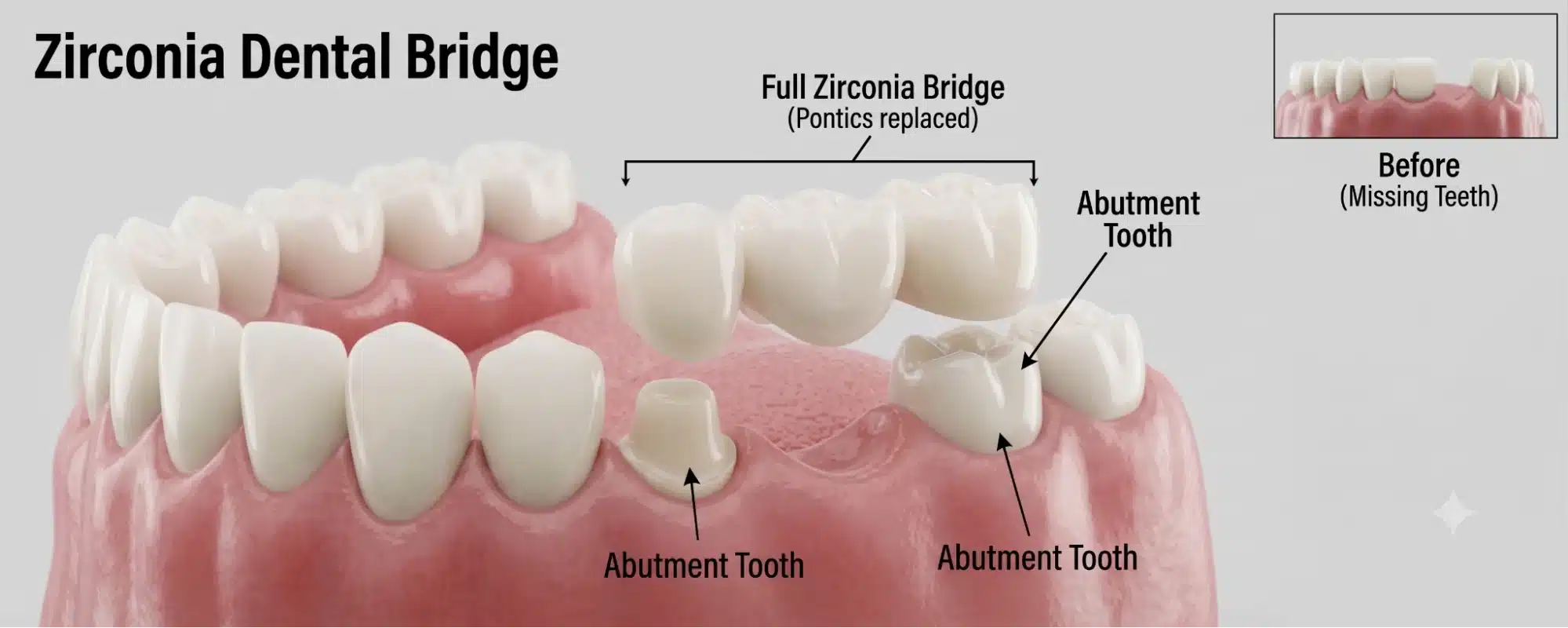
A zirconia dental bridge is a fixed restoration that replaces one or more missing teeth. The bridge typically uses crowns on the neighboring teeth to support an artificial tooth, known as a pontic, that fills the gap.
The material is zirconium dioxide, a ceramic known for its strength and fracture resistance. Unlike traditional metal-supported restorations, zirconia contains no metal, making it appealing to patients who prefer an all-ceramic restoration.
You should understand the difference between a zirconia crown and a bridge because the two differ. A crown protects an individual tooth, while a bridge replaces one or more missing teeth by connecting them to supporting teeth.
Why Consider Zirconia Dental Bridges?
The various advantages of zirconia dental bridges are listed below:
They are strong. They can handle chewing pressure, making them a practical option for areas that experience heavy biting forces.
Zirconia is ceramic, so it looks natural. The material can be carefully shaded and shaped to blend with surrounding teeth. Many patients wonder whether zirconia bridges look natural. They can, especially when the restoration is carefully matched to the color of the surrounding teeth. Zirconia is metal-free. Patients who want a metal-free, full ceramic restoration can consider zirconia.
It has a smooth, nonporous surface that resists staining under normal conditions.
| Expert insight from Dr. Jeremy Silverman, DMD: “Patients are often surprised by how natural zirconia can look once it’s properly shaded. The strength gets most of the attention, but matching it to the surrounding teeth is just as important to the final result, especially for a bridge in a visible spot.” |
Are There Any Downsides?
Zirconia bridges have multiple advantages, but no dental material is perfect. Consider the cons too before selecting the material.
Appearances can vary. Older or less translucent zirconia might look more opaque than natural enamel. Newer generations offer improved translucency, but some highly aesthetic situations may need other ceramics for a better appearance.
Cost is another factor. Are zirconia dental bridges worth the cost? For many patients, the combination of strength, aesthetics, and metal-free construction makes zirconia worthwhile. But the best-value restoration isn’t necessarily the most expensive one.
Zirconia vs. Porcelain: Which Is Better?
Patients are advised to compare options, so we often discuss the pros and cons of zirconia vs. porcelain bridges. Before you explore them, you should know that porcelain refers to several different ceramics.
- Zirconia has an advantage when strength and fracture resistance are priorities. However, some porcelain restorations can offer exceptional translucency and lifelike aesthetics.
- Porcelain bridges are good for front or side teeth, but when you need strength, zirconia bridges are the right choice.
- When durability is important, dentists recommend zirconia, but when a patient wants a natural look, porcelain is the better option.
- Zirconia bridges require less tooth preparation than porcelain bridges.
- Porcelain bridges can last 5-10 years, while zirconia bridges can last longer.
| Real patient experience: “Very professional and attentive to when I need extra time and assurance for my first major dental procedure since my wisdom teeth surgery.” — Creole Diva, verified Google review |
How Long Can Zirconia Dental Bridges Last?
Dental bridges have no guaranteed shelf life. Good oral hygiene, appropriate bite forces, regular dental visits, and healthy supporting teeth can provide many years of service.
Material isn’t the only factor when choosing dental bridges. Tooth decay around the supporting teeth, gum disease, excessive grinding or clenching, and trauma can affect how long a bridge lasts.
Zirconia Bridge Cost
The cost of a zirconia bridge depends upon the number of teeth involved, the condition of the supporting teeth, the lab used, and whether you need any additional procedures.
The dentist you choose also affects the price.
If you need a quote, you can book an appointment with us at Peace of Mind Dental Studio.
Do You Need Dental Bridges?
If you need dental bridges and are wondering whether zirconia dental bridges are right for you, consult a dentist first. Explore the material options and choose the one that fits your budget.
At Peace of Mind Dental Studio, we evaluate your dental health, understand your goals, and then help you understand your options, so you are satisfied with the results. We help you every step of the way, and if you have any questions, we are here for you.
Call us now to learn more.
Frequently Asked Questions
Q: How long do zirconia dental bridges last?
A: A zirconia bridge can last many years with proper care, but its lifespan depends on oral hygiene, bite forces, supporting teeth, gum health, and regular dental care.
Q: Do zirconia bridges look natural?
A: Yes. Modern zirconia can be carefully shaded and shaped to create a natural-looking result. The final appearance also depends on the type of zirconia and the quality of the dental laboratory work.
Q: Are zirconia dental bridges worth the cost?
A: If you want bridges that offer strength, durability, and aesthetics, they offer value for money.
Q: Can a zirconia dental bridge stain?
A: Zirconia is highly stain-resistant, although surface characteristics and surrounding natural teeth can affect the overall appearance of the smile over time.
Q: What are the alternatives to a zirconia bridge?
A: Alternatives include ceramic bridges, porcelain-fused-to-metal bridges, and removable partial dentures.