

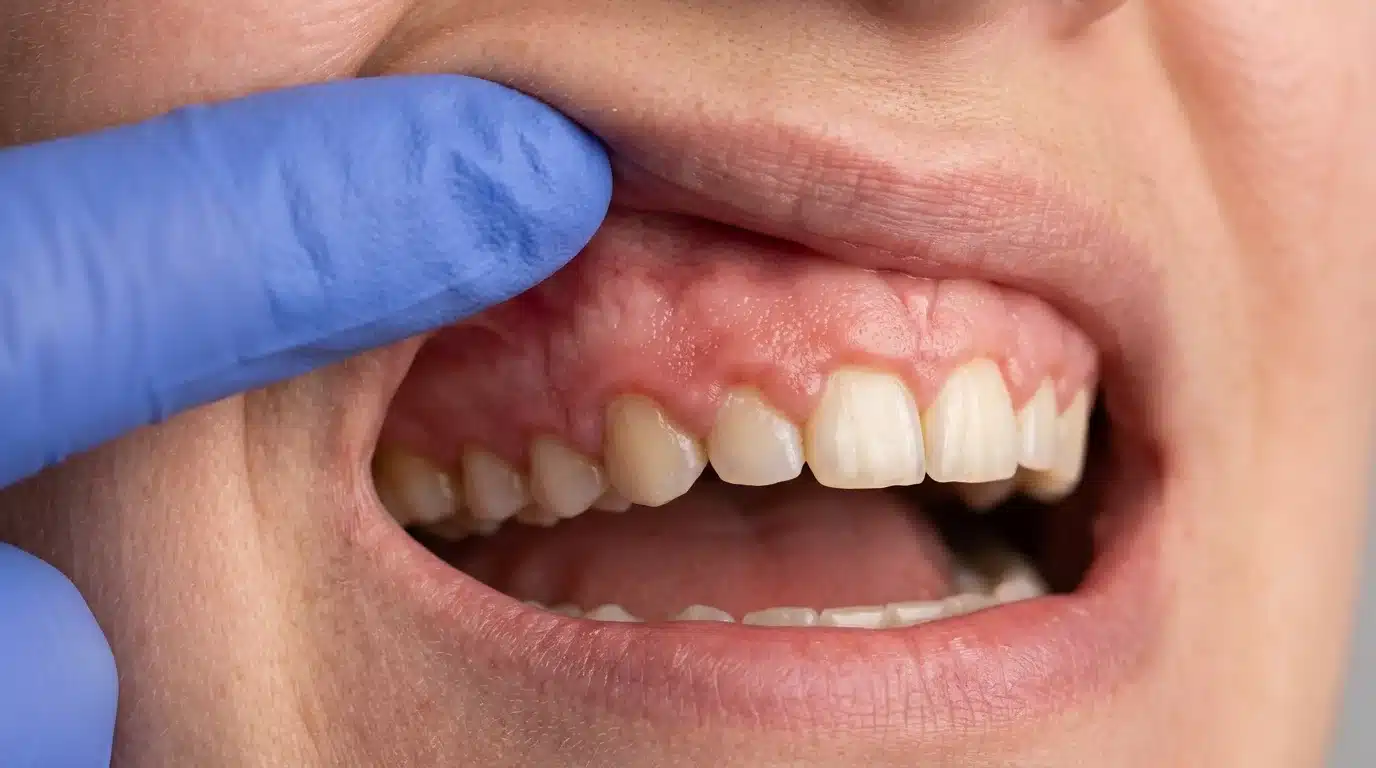
Quick Answer: Gingival hyperplasia can be caused by poor oral hygiene, medications, hormonal changes, inherited disorders, and more. It’s crucial to determine the cause before treating it. Consulting a dentist is crucial to determine the right course of treatment.
Summary
If your gums seem bigger and your teeth appear smaller, you may have gingival hyperplasia. It is a condition in which gum tissue grows and eventually covers the teeth, making them appear smaller. This creates space for plaque and tartar buildup, which can lead to inflammation and bleeding.
It is painless and often goes unnoticed for a long time. Multiple causes contribute to the overgrowth, so several treatments are available. Consulting a dentist is essential. This blog has discussed why.
The key highlights of the blog are:
- Gingival hyperplasia causes excessive enlargement of gum tissue around the teeth.
- Certain medications commonly cause gum overgrowth.
- Poor plaque control can worsen existing gum enlargement.
- Overgrown gums may bleed or become tender, but they aren’t always painful.
- Treatment focuses on identifying and addressing the underlying cause.
- Never stop or change a prescribed medication without speaking with the prescribing healthcare professional.
Naturally, gum tissue starts where the tooth disappears underneath it. But in some cases, gum tissue can grow over the tooth. It makes your smile look gummy.
This condition, known as gingival hyperplasia, can develop due to several factors. This blog explores the common causes of gingival hyperplasia and the available treatment options.
Read on!
What Is Gingival Hyperplasia?
It is an enlargement or overgrowth of the gingival tissue around the teeth. The gums gradually become thicker and cover part of the tooth surface.
The condition might be limited to a small area or involve a significant part of the mouth. It can make the teeth look much smaller. Severe enlargement of the gum tissue makes dental hygiene harder to maintain, creating an ideal breeding ground for bacteria and plaque.
Gum hyperplasia and gingival hyperplasia refer to the same condition and are often used interchangeably.
| Expert Insight “The gum tissue itself is rarely the real problem; it’s almost always a symptom of something else, whether that’s plaque buildup, a medication, or genetics,” says Dr. Jeremy Silverman, DMD, of Peace of Mind Dental Studio. “That’s why we always start by figuring out the cause rather than jumping straight to removing tissue.” |
Why Are My Gums Growing Over My Teeth?
There are multiple reasons why your gums might be growing over your teeth, such as:
| Category | Common Examples |
| Oral hygiene | Plaque and tartar buildup from inconsistent brushing or flossing |
| Medications | Amlodipine, nifedipine, phenytoin, cyclosporine, and other immunosuppressants |
| Orthodontic appliances | Braces or aligners that irritate the gum line |
| Genetics | Inherited predisposition to gum tissue overgrowth |
| Hormones | Hormonal changes linked to puberty, pregnancy, or other shifts |
Identifying the underlying cause is crucial to choosing the right treatment.
What Medications Can Cause Gingival Hyperplasia?
Medication is a common cause of gingival hyperplasia. Not every medication can cause hyperplasia, but high blood pressure medicines such as amlodipine or nifedipine can cause it. Antiseizure medications such as phenytoin and immunosuppressants can also cause gingival enlargement.
When discussing the problem with your dentist, it’s crucial to share your current medications. It will help them determine the cause. They can recommend whether any medication adjustments are needed.
Is Gingival Hyperplasia Painful?
Most often, people notice the condition when their teeth start looking smaller. It doesn’t hurt, but it can make brushing and flossing difficult. It can also lead to plaque buildup and may cause inflammation, bleeding, bad breath, tenderness, and periodontal problems.
Sometimes the tissue becomes painful and swollen, which necessitates a dental examination.
Regular dental visits can help catch the problem early.
| Real Patient Experience “The person who did my x-rays and cleaned my teeth was really good at explaining what she was doing and why. Very helpful on how to make one place where my gums were not as healthy as the rest better.” — LT, Google review |
How Do Dentists Fix Overgrown Gums?
The first step of treatment is determining the cause of the overgrowth.
- Dental cleaning is the best option if plaque and inflammation are the main causes, and in some cases a deeper cleaning or gum disease treatment such as scaling and root planing may be recommended.
- If medication is causing the overgrowth, your dentist may discuss medication adjustments with your physician.
- In advanced cases, you might require surgical removal.
Gingival hyperplasia doesn’t have a one-size-fits-all treatment. The right course depends upon the underlying reason and the extent of growth.
Want more on treatment options? Read more: Gum Hyperplasia Treatment Options: Managing Gum Overgrowth
Can You Treat Overgrown Gums Naturally?
You can manage gum overgrowth at home only through impeccable oral hygiene. However, significantly overgrown gum tissue requires surgical removal.
To prevent gum overgrowth, brush twice a day and floss regularly to remove trapped food particles that cause plaque buildup. Professional dental cleanings, part of a good preventative dentistry routine, help remove plaque and hardened tartar.
If your gums continue to enlarge despite good oral hygiene, contact Peace of Mind Dental Studio.
When Should You See a Dentist?
If you notice gum overgrowth and frequent bleeding, have difficulty brushing & flossing, and experience pain, it’s time to see a dentist. If you are on medications, tell your dentist so they can identify potential causes of the overgrowth.
The dentist will evaluate your gum health, periodontal issues, and family history of gingival hyperplasia, then recommend an appropriate treatment plan.
Heard some gum disease myths? Read more: 6 Common Myths About Gum Disease
Looking For A Dentist in Chandler?
If your gums seem to be growing, don’t procrastinate. Schedule an appointment with us at Peace of Mind Dental Studio as soon as possible. We pride ourselves on providing treatments that align with your needs, not a one-size-fits-all solution.
Remember, you can’t correct gingival hyperplasia at home. It needs professional evaluation and sometimes, surgical removal. So, don’t waste time, and book your appointment today!
Frequently Asked Questions
Q. Why are my gums growing over my teeth?
A. Multiple reasons might be responsible for this, such as hormonal changes, medications, systemic conditions, inherited disorders, poor oral hygiene, etc.
Q. Is gingival hyperplasia a painful condition?
A. Not always. Some people have little or no pain. However, enlarged gums can make cleaning difficult, which leads to inflammation, bleeding, tenderness, or bad breath.
Q. Can overgrown gums go back to normal?
A. Sometimes, yes. Medication-induced overgrowth can go back to normal after medication changes, but you still need professional evaluation.
Q. What medications cause gingival hyperplasia?
A. Anticonvulsants such as phenytoin, some calcium channel blockers such as nifedipine and amlodipine, and immunosuppressants such as cyclosporine are recognized causes of gingival enlargement.
Q. When should I see a dentist?
A. It is recommended to see a dentist when you notice that your teeth look smaller. Other signs include bleeding, plaque buildup, inflammation, and swollen gums.