

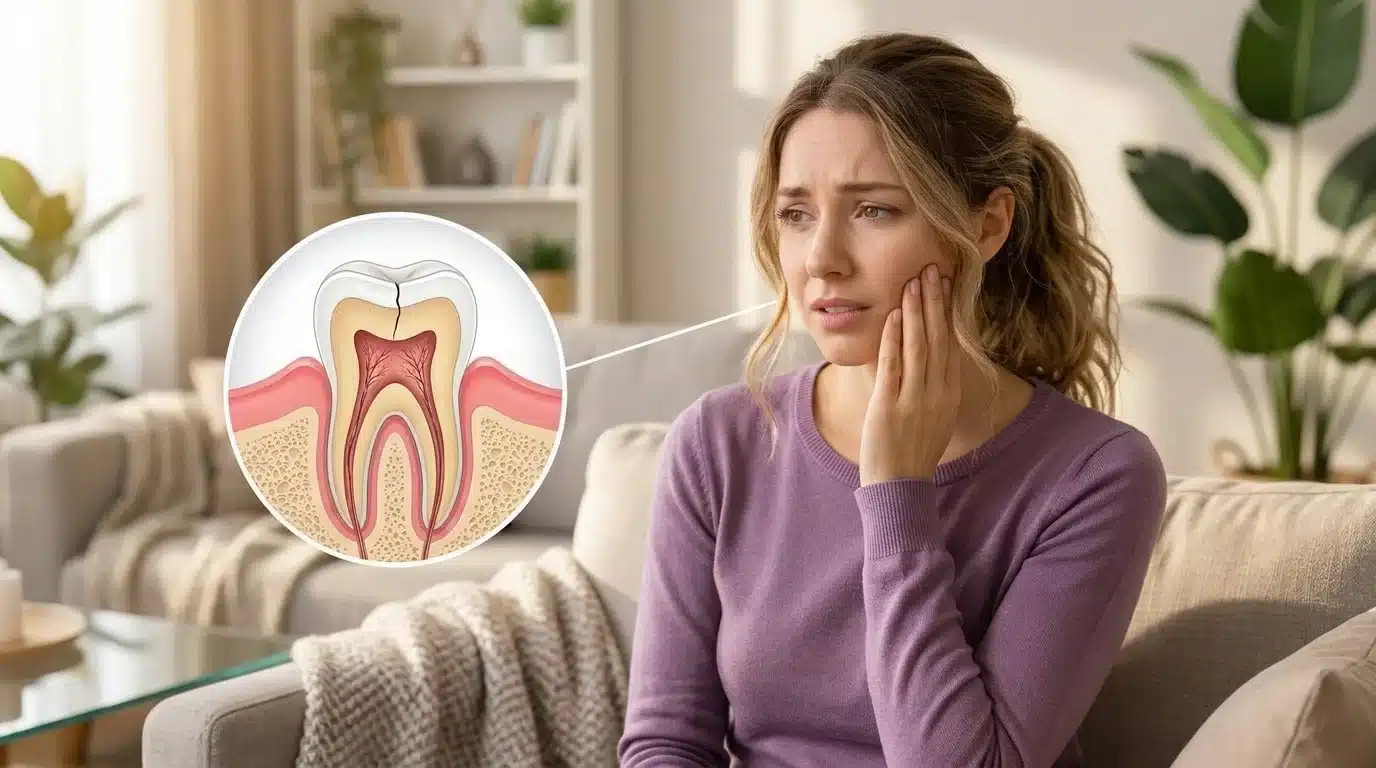
Quick Answer: Cracked tooth syndrome refers to a tooth fracture caused by bruxism, trauma, or injury. Depending on the location and extent of the damage, treatment options include dental bonding, a crown, a root canal, or extraction.
Summary
A cracked tooth isn’t always visible and easy to identify. Sometimes you might feel pain while chewing without seeing any visible damage, while in other cases you might feel sensitivity to hot or cold foods. It might be cracked tooth syndrome. It happens when a fracture in your tooth affects normal biting pressure. Different treatments are available, as discussed below.
The key highlights of the blog are:
- Cracked tooth syndrome can cause intermittent pain, particularly when biting or releasing pressure.
- Molars are especially vulnerable because they handle significant chewing forces.
- A cracked tooth cannot heal or repair itself naturally.
- Treatment may include dental bonding, crowns, or root canal therapy.
- Early diagnosis can improve the chances of saving the natural tooth.
Cracked tooth syndrome refers to a fracture that can extend from enamel to dentin without breaking the tooth itself. The cracks aren’t always visible, making it difficult to identify what’s causing pain or discomfort during eating or drinking.
Molars and premolars are often affected because they handle much of the chewing.
If you are experiencing similar problems or have a cracked molar, this blog is for you. It discusses cracked tooth syndrome in detail and available treatments.
| Expert Insight “The tricky part about a cracked tooth is that it often doesn’t show up on an X-ray or even look like much to the naked eye, but the patient can tell you exactly which bite makes it hurt,” says Dr. Jeremy Silverman, DMD, of Peace of Mind Dental Studio. “That’s why we take the symptoms as seriously as what we can see.” |
What Causes a Tooth to Crack?
Teeth are strong, but repeated pressure, trauma, and existing dental damage can make them vulnerable to fractures.
Here are some common causes behind tooth fractures:
| Cause | How It Happens |
| Biting hard foods | Ice, hard candies, unpopped popcorn kernels, and similar foods can put excessive pressure on teeth |
| Teeth grinding | Bruxism can cause cracks in molars from repeated stress, and a well-fitted night guard can help protect against it |
| Large fillings | Extensive restorations weaken the natural tooth structure |
| Physical injuries | Falls, sports injuries, and accidents can also cause sudden fractures |
| Age-related wear | Teeth become weaker with age, so cracks become more common |
Want to know more about what causes a chip or crack, and how to avoid it? Read more: Common Causes of a Chipped Tooth & Crown — and How to Prevent It
What Are the Symptoms of a Cracked Tooth?
Symptoms vary, and not all are obvious, because you might be in discomfort one day and perfectly fine the next.
However, here are the common symptoms:
- Sharp pain when biting down or releasing pressure.
- Sensitivity to hot and cold foods or drinks.
- Pain that comes and goes without an obvious explanation.
- Discomfort when chewing on one particular side.
- Swelling or tenderness around the affected tooth.
Pain while chewing is the most common symptom. This happens because pressure can cause cracked sections of the tooth to move slightly, irritating surrounding structures.
How Does a Dentist Diagnose a Cracked Tooth?
You can’t identify a crack just by looking at the tooth. There are several steps for diagnosis, such as:
Bite testing: Biting on a small instrument or stick helps identify which tooth or section causes discomfort.
Staining dye: A special dye can make certain cracks easier to identify.
Transillumination: Light is passed through the tooth to help reveal fracture lines.
Dental X-rays: Imaging helps assess the tooth, surrounding structures, and possible trauma damage, although small cracks might not show clearly on an X-ray.
| Real Patient Experience “I broke a tooth and needed it repaired. I found Peace of Mind Dental on ZocDoc and the reviews were great. Made an emergency appointment online via ZocDoc…” — JBT T, Google review |
Can a Cracked Tooth Be Fixed?
Yes, a cracked tooth can be fixed if it is not severely damaged.
Here are some common treatment options based on the severity of the fracture:
Dental Bonding: Dental bonding can repair minor cracks or smaller areas of damage. It uses a composite resin to restore the tooth’s appearance and seal the affected area.
Dental Crown: A dental crown covers and protects a weakened tooth. When a substantial portion of the tooth is damaged or needs additional protection, a dental crown is often recommended.
Root Canal Treatment: Sometimes a crack can reach the pulp and cause inflammation or infection. It requires a root canal treatment. It involves removing the infected pulp, sterilizing the site, and filling it with gutta-percha.
Tooth Extraction: Sometimes a tooth is cracked beyond repair, and extraction may be the only option. It may require dental implants to restore strength.
Does a Cracked Tooth Need to Be Pulled?
Not necessarily. A cracked tooth does not automatically mean extraction. If you get a consultation in time, you may be able to save the tooth, depending on the crack’s location and extent.
However, if the fracture extends below the gumline or into the root in a way that makes the tooth unrestorable, saving it isn’t possible. Thus, an early examination matters. Waiting too long can worsen the fracture and may require extensive treatment.
Can a Cracked Tooth Heal on Its Own?
No, a cracked tooth can’t heal naturally on its own. Even if the pain might disappear on its own, the structural damage remains. Continued chewing can worsen the fracture.
Until you have it examined, avoid chewing on the affected side. If you have had a recent injury or have any of the symptoms discussed above, arrange a dental appointment.
Dealing with Cracked Tooth Syndrome?
If you have a cracked tooth or are experiencing any of the symptoms above, don’t procrastinate. Ignoring it can only make the problem worse. Whether the crack is visible or not, book a consultation with Peace of Mind Dental Studio.
We recommend getting your tooth checked as soon as possible to avoid more complicated dental treatments later. We offer complete dental treatment for cracked tooth syndrome, including dental bonding, crowns, root canal, and dental implants.
Looking for a dentist in Chandler? Call us now!
Frequently Asked Questions
Q. Why does my tooth hurt only when I bite down and release?
A. A crack might cause the tooth’s parts to move around under pressure, causing pain during biting and releasing the bite.
Q. Can a cracked molar be fixed with a crown?
A. Yes. A dental crown can protect a cracked molar by covering and supporting the remaining tooth structure. However, we must evaluate the tooth to determine whether a crown is suitable.
Q. Does a cracked tooth always need a root canal?
A. No, a root canal is necessary when the pulp is inflamed or irritated. Cracks that haven’t affected the pulp can be restored with other treatments.
Q. Can a cracked tooth be saved?
A. A cracked tooth can be saved by getting early treatment. However, the outcome depends upon the depth, location, and extent of the fracture.
Q. Is a cracked tooth a dental emergency?
A. If you suspect a cracked tooth, you should book an appointment at the earliest, even if there is little to no pain. If you have severe pain, swelling, fever, or infection, you need an urgent dental visit.